
Neurology equipment upgrade a gamechanger for treating seizures
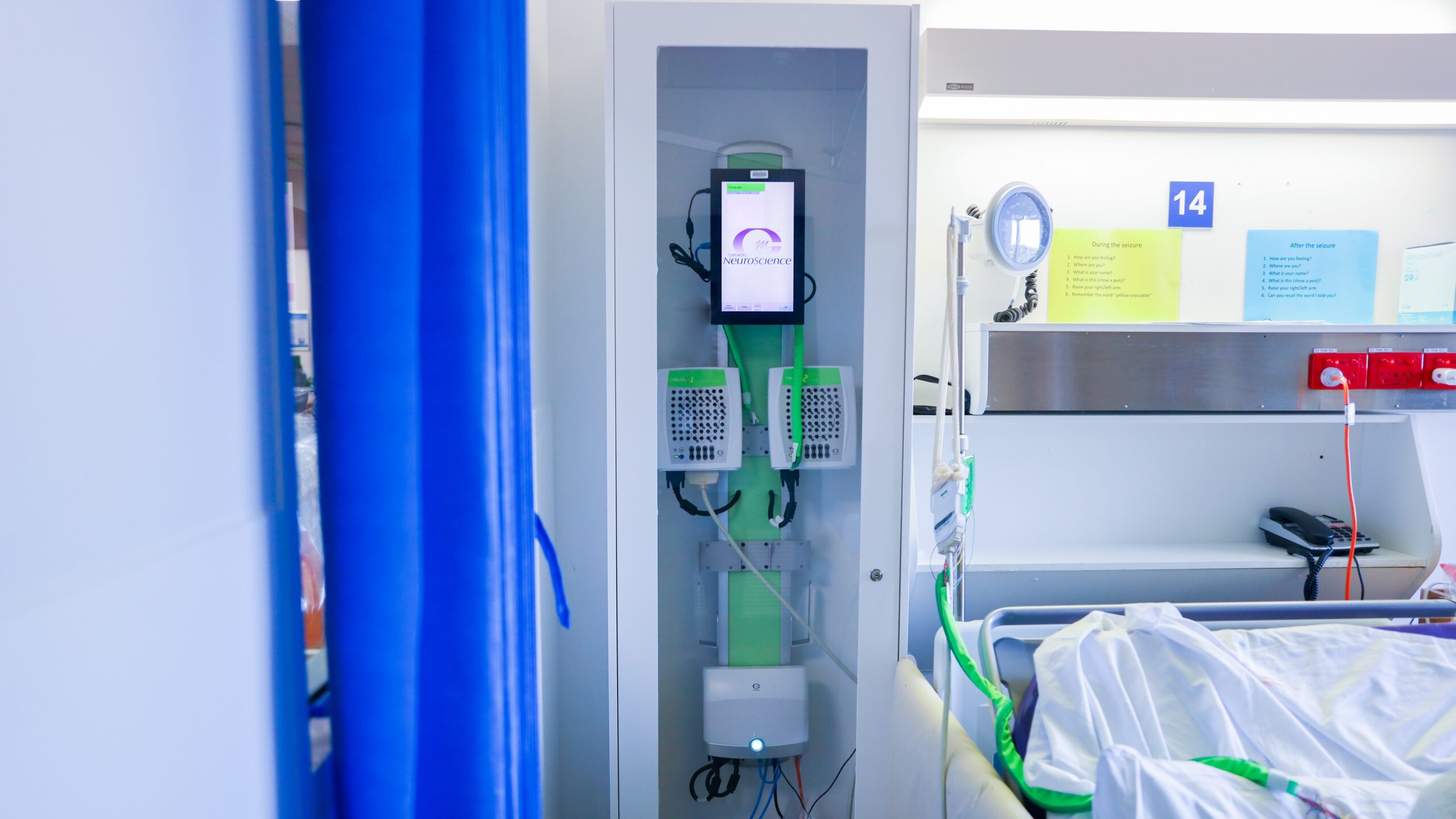
A state-of-the-art equipment upgrade in Monash Health’s neurology department will see patients who experience seizures diagnosed quicker and more efficiently.
Monash Health has introduced an upgraded Electroencephalogram (EEG) system which measures electrical activity in the brain, used for testing and diagnosing epilepsy and other neurological events that can cause seizures.
The upgraded EEG system is able to capture a seizure event in the brain more reliably, identify the type of seizure, and determine its location more precisely.
Udaya Seneviratne, Head of Epilepsy and Deputy Director of Neurology at Monash Health, explained how important the EEG test is to treat patients who present to the hospital with seizures.
“We see a patient on the ward or in the clinic with events where we are unsure if it is epilepsy or another condition that can mimic epilepsy. This distinction is very important for us, so we bring those patients in for an EEG to monitor their brain waves to understand the underlying condition so we can start the correct treatment.”
Giosi Cardamone, Chief Neurophysiology Scientist at Monash Health, says the ability to capture these events with the EEG system will minimise recurrent patient presentations to the Emergency Department.
“What happens a lot of the time is patients come to ED, but by the time we get to do an EEG, they stop having seizures. This new equipment allows us to monitor patients for a longer period, capturing an event, and the neurologists can see exactly the type of seizure they are having.”
“This will hopefully minimise the number of unnecessary admissions to the emergency department”.
This upgraded equipment will also greatly benefit patients who have a condition called refractory epilepsy.
For most patients, treatment begins after an EEG where the underlying condition of the epilepsy is diagnosed. However, 30 to 40 percent of these patients do not respond well to medication. This is called refractory epilepsy, meaning the patient is on medication but still has ongoing seizures.
Udaya explains, “one of the main treatment options we consider for these patients is surgery for epilepsy. To do this surgery, we need to understand which part of the brain is generating these seizures, and this is where the EEG monitoring comes into place.”
An EEG test will determine the patient’s appropriate surgical procedure and offer alternative treatment options to treat their seizures.
This upgrade will support Monash Health’s neurology department conduct its more than 2,500 annual EEG tests on adults and children.


