
Meet Dwayne Pearce, Acting Manager of the Aboriginal Hospital Liaison service
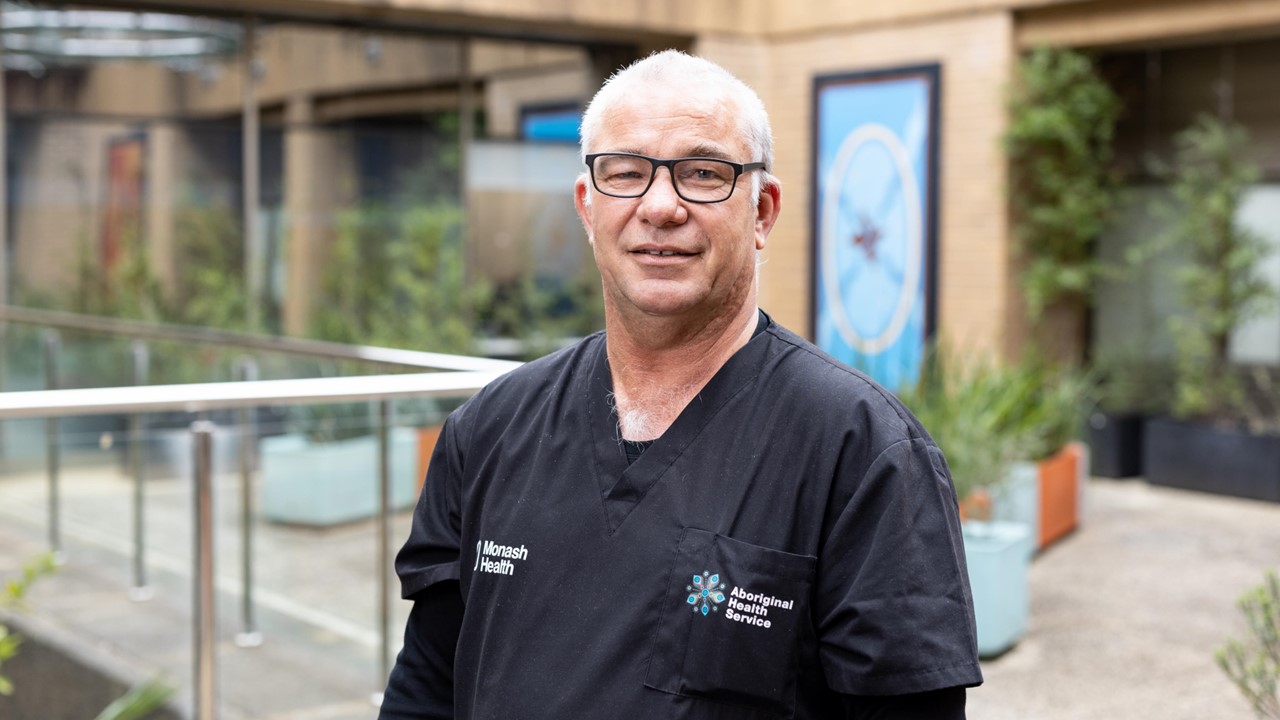
Meet Dwayne Pearce, who is Acting Manager of the Aboriginal Hospital Liaison service and a proud Arrernte man.
“I did my Aboriginal Health Practitioner training in Alice Springs,” Dwayne says. “Then I spent eleven years working for the Northern Territory government in Aboriginal Health, mainly intensive care, and then as a cardiac educator.”
In the Northern Territory, Dwayne was part of a team that flew out to remote communities to provide lifesaving cardiac care. Since moving to work in Melbourne, Dwayne has noticed many differences in healthcare and culture.
“They’re still very culturally strong up in the Northern Territory,” explains Dwayne. “Just in Alice Springs, there’s about 15 languages, but you very rarely hear Aboriginal languages down here. Healthwise, though, it is typically the same medical conditions.”
As Aboriginal Hospital Liaison Officers, Dwayne and his team provide an integral service for First Nations people when they need it most.
“We’re a bridge between the clinical team and First Nation patients and families,” says Dwayne.
“We’re there to support the patient in their journey through the health system, to give them guidance and translate medical jargon. We also provide general cultural support and links to external agencies.”
Building rapport with patients is an important first step as an AHLO.
“We chitchat and we earn their trust,” says Dwayne. “We don’t just get to know their condition; we get to know the patient.”
Dwayne says the best part of the job is speaking with mob. “It’s being there for someone when they’ve really got no one else at that time.”
“I went and saw an 86-year-old lady yesterday, and it was just for a yarn. Believe me, I know every single thing about her family now.”
“Her advice for me was don’t ever get old,” Dwayne adds with a chuckle.
Dwayne finds end-of-life-care the most challenging aspect of being an AHLO.
“It’s hard not to take it home,” says Dwayne. “I just dealt with losing a patient and being there with the whole family while that was going. That’s the hardest part for me and my staff.”
Despite the challenges, Dwayne emphasises the importance of making patients feel comfortable and safe in the health service.
“Especially when I go up on the children’s ward,” says Dwayne. “I’ll introduce myself and then say, ‘I’m not here to give you any needles!’ Sometimes it’s about being a bit of a comic. It’s about making them smile.”
This profile is part of a series shining a spotlight on the Monash Health Aboriginal Hospital Liaison Officers. AHLOs provide vital cultural support and assistance to all Aboriginal and Torres Strait Islander patients and their families during their inpatient stay in Monash Health. They can also help connect patients to community services during discharge planning.


