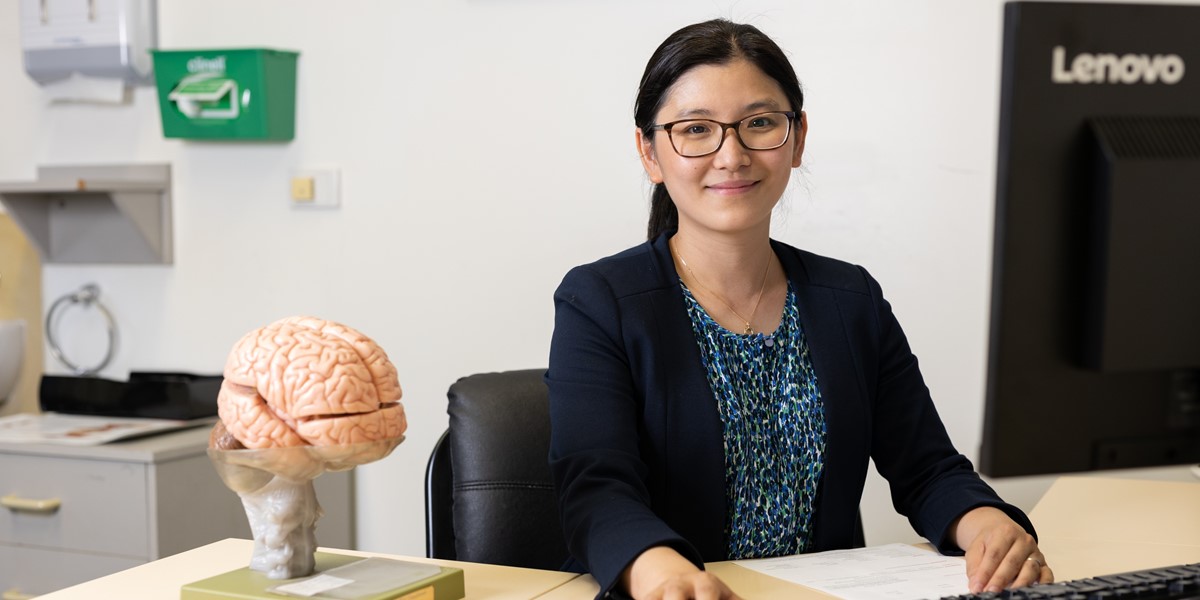
A new study at Monash Health will focus on the model of care for treating Huntington’s disease and explore a team-based response to the treatment of this disease, which could help improve the quality of life for people living with Huntington’s disease.
This is the first time a study into a team-based model of care for Huntington’s disease has been conducted in Australia. Dr Yenni Lie is overseeing this study as part of her PhD project, supervised by Professor Thanh Phan, Professor Henry Ma, and Associate Professor Susan Mathers.
This study is being funded by a $50,000 grant received from the Bethlehem Griffiths Research Foundation.
“We are really thrilled and honoured to receive this grant which will support our study that will aim to assess how a coordinated team-based clinic practice may influence outcomes for people living with Huntington’s disease”, said Dr Lie.
Huntington’s disease is an inherited disease in which the nerve cells in the brain break down over time, leading to death within 15 to 20 years after symptom onset.
At present there is no cure or treatment that can slow the progression of this disease. Treatment is currently focused on providing patients with symptom relief and management.
Dr Lie said, “Monash Health works in collaboration with a state-wide progressive neurological disease service based at Calvary Health Care Bethlehem. This service sees approximately 70% of people with Huntington’s disease in Victoria which is a large population of people with the disease.”
This study will explore whether a coordinated team-based model of care provides better outcomes for patients, compared to a traditional physician-led model of care.
In particular, this study will investigate whether the team-based approach may help people with Huntington’s disease have a longer life expectancy, see a reduction in unplanned hospital admissions, and avoid or delay the need for residential care.
“It is really important to have a team-based approach due to the complex and diverse manifestations of the disease,” said Dr Lie.
“Patients have trouble not only with their movements, they may also have cognitive difficulty and mood and behaviour disturbances. A team-based approach allows healthcare professionals with a range of skills to work together to address the diverse symptoms and provide optimal care for the patients and their families.”