
A donation from the Friends of the Children Foundation has enabled Monash Children’s Clinical Trial Centre to acquire a vein-finding tool, bringing relief to our younger patients and those who find communication and understanding more difficult, thereby facilitating access to new and innovative therapies.
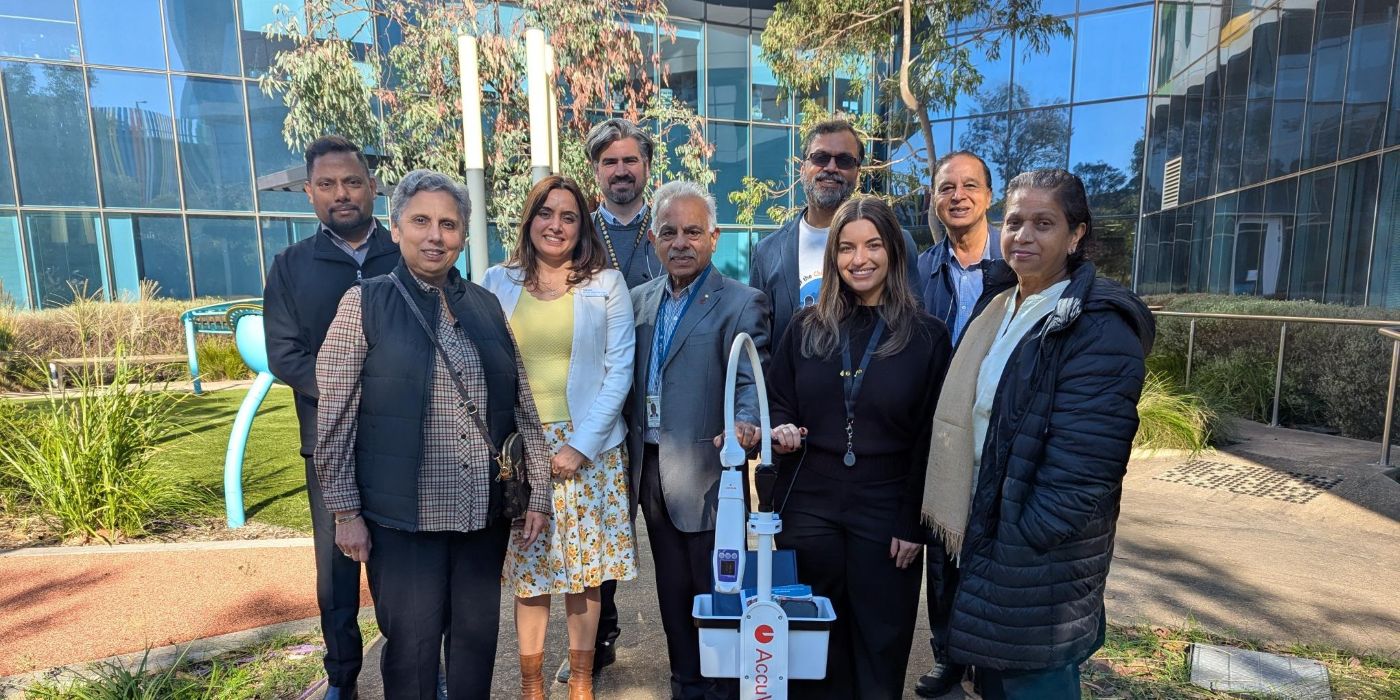
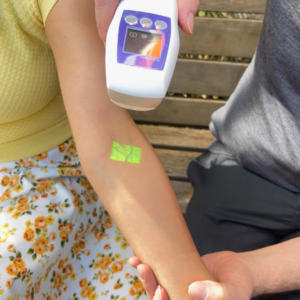
The device, AccuVein, acquired thanks to a $10,000 donation from the Friends of the Children Foundation via the Monash Health Foundation, uses near-infrared light to help identify potential veins for blood testing or for inserting a small tube, cannula, that allows medication or fluids to be delivered directly into the bloodstream.
Venepuncture and intravenous (IV) cannulation can cause significant pain, distress, and anxiety for children. This is particularly the case for younger children, or those who find communication and understanding more difficult, including autistic children or those with intellectual disability.
In 2025, around 25 of the 55 clinical trial participants (45%) were neurodivergent children, accounting for approximately 48% of all study visits.
AccuVein helps identify the best available vein, reducing procedure time, pain, and the number of needle attempts.
‘We recently used it on a participant who needed blood collection while under sedation, and it worked really well. It helped locate the vein immediately, so venepuncture was quick and successful on the first attempt,’ said Jess Foley, a research nurse at MCCTC.
‘It made a big difference in reducing discomfort, as there were no multiple needle attempts or bruising.’
Whom it helps most
Published research supports the effectiveness of near-infrared devices for peripheral IV cannulation in children and adolescents, with studies reporting reduced procedure time and fewer attempts in paediatric patients.
A study in the Unites States also points to improved vein visualisation in children who are overweight, and in children of African American or Asian ethnicity.
‘Note that we have very experienced research nurses who are highly capable at venipuncture and cannulation, so AccuVein is not used in all children,’ said MCCTC Medical Lead Associate Professor David Metz.
‘However, it is estimated to have been used in 10 to 15 children since the start of the year when we acquired the device. We will likely increase usage over time, as people become more familiar with it.’
Nurse Foley says she found it a useful tool for children who were nervous or had procedural anxiety.
‘It gives us the opportunity to look for their veins together and even choose the site,’ she said.
‘I also found that when we had a child with very fine and “difficult” veins, the AccuVein helped us to physically show the parent why the collection was difficult, improving rapport and allowing for better shared decision-making processes.’
Part of a broader effort
AccuVein is one of several measures introduced by the clinical trials team to reduce the pain, distress, and burden of blood testing and cannulation.
The centre also offers a child-friendly day-bed space, dedicated research nurses with substantial procedural experience, and the capacity for light procedural sedation, which the team described as a ‘game changer’ for enabling needle-phobic children to participate in clinical studies.
‘The interventions overall have unquestionably reduced distress and improved the experience of children at our clinical trials centre. Procedural sedation has probably been the biggest improvement, and then AccuVein has been the icing on the cake,’ said Associate Professor Metz.
About Friends of the Children Foundation
Friends of the Children Foundation Inc (FOTCF) is an Oakleigh-based charity operating since 1998, guided by the values of care, compassion, and commitment.
The foundation’s core focus is supporting children’s hospitals by raising funds to purchase critical equipment, while also extending its reach into the broader community through food relief, environmental education, and support for refugee houses and disadvantaged groups.
In 2012, under the guidance of founder Shashi Kochhar, FOTCF established one of Monash Health Foundation’s most successful fundraising events — the Monash Children’s Hospital Walk, held every year on the first Sunday in March at Jells Park in Wheelers Hill.
More recently, the FOTCF 2024 Gala, supported by residential home builder Henley Homes and managed IT service provider Syscare IT Solutions, raised $10,000 for the Monash Children’s Hospital Clinical Trials Centre — funding the AccuVein device that is now improving the experience of children in our care.
‘We have so much gratitude for our incredible donors and supporters of the Monash Health Foundation,’ said John De Rango, Director of Monash Health Foundation.
‘It is through our community’s heartfelt giving that our care teams can continue to enhance the world-class care that we provide to our patients and their families.’
To learn more about the Monash Health Foundation, please visit: www.monashhealthfoundation.org


