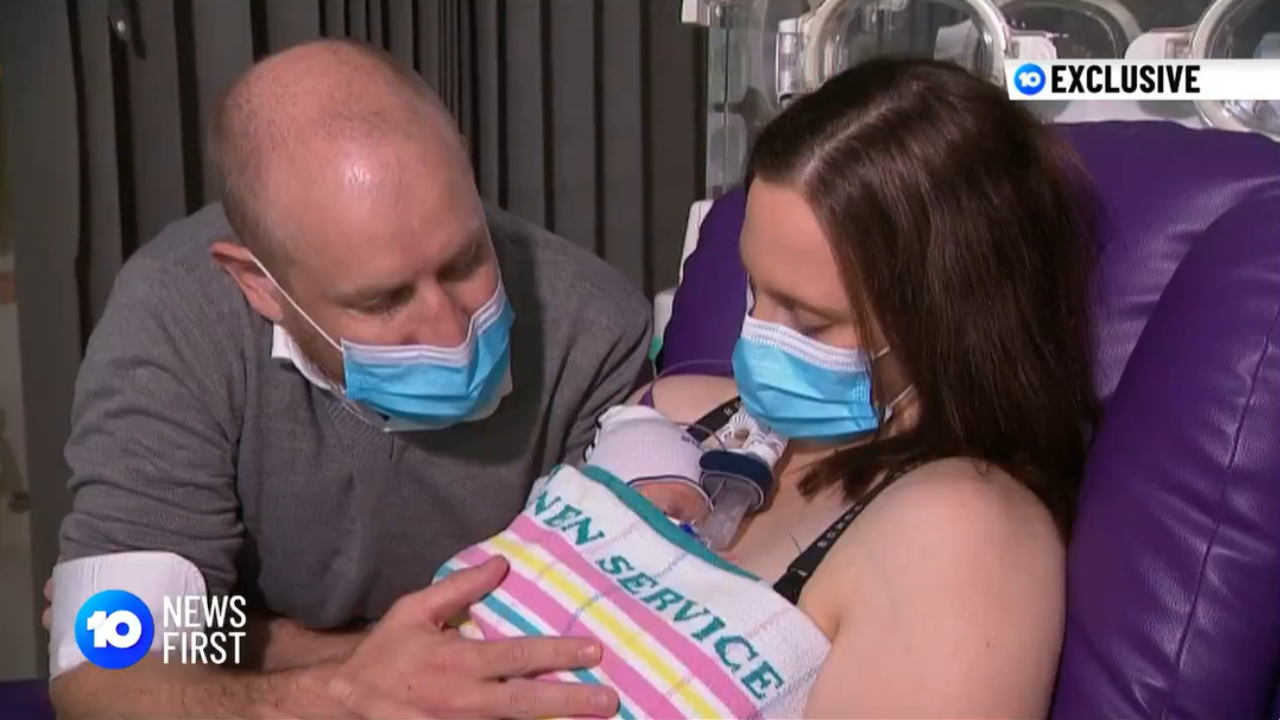
A study at Monash Children’s Hospital has discovered potentially lifesaving benefits of providing pre-term babies with early, regular skin-to-skin contact, known as Kangaroo Care.
As Reported by 10 News First, researchers found that Kangaroo Care can significantly improve the respiratory condition and health outcomes for pre-term babies.
Kangaroo Care has long been known to improve parent-baby bonding, brain development and cardiovascular regulation. However, little had previously been known about its use among ventilated pre-term babies.
The new research conducted by Monash Children’s Hospital and Monash University revealed that premature babies receiving respiratory support retain better oxygen levels with skin-to-skin Kangaroo Care rather than standard incubator care.
“Fluctuations in oxygen levels, fluctuations in breathing patterns and the fluctuations in heart rate were significantly less,” says Professor Arvind Sehgal, Head of Neonatal Cardiovascular Research at Monash Children’s Hospital.
“Until now, the lack of decisive information about how ventilated premature babies’ oxygen levels respond during Kangaroo Care has resulted in barriers to its wider implementation for babies who are reliant on respiratory support.”
Families at Monash Children’s Hospital are being encouraged to use Kangaroo Care, including the parents of baby Lenny, who arrived 8 weeks early, weighing just 738 grams and requiring incubator care.
“There’s been times where he has been crying and his heart rate’s been really high. We’ve got him out and on me, he’s settled right down, he’s gone to sleep, his heart rate’s really settled and stable,” says Elizabeth Jane Prowd, Lenny’s mother.
“This research reassures parents, as well as medical and nursing teams, about the benefits and safety of Kangaroo Care in very premature, fragile and ventilated infants. It also supports the World Health Organization proposal for pre-term infants to be engaged with skin-to-skin care early and regularly for the best possible health outcomes,” says Professor Arvind Sehgal.