


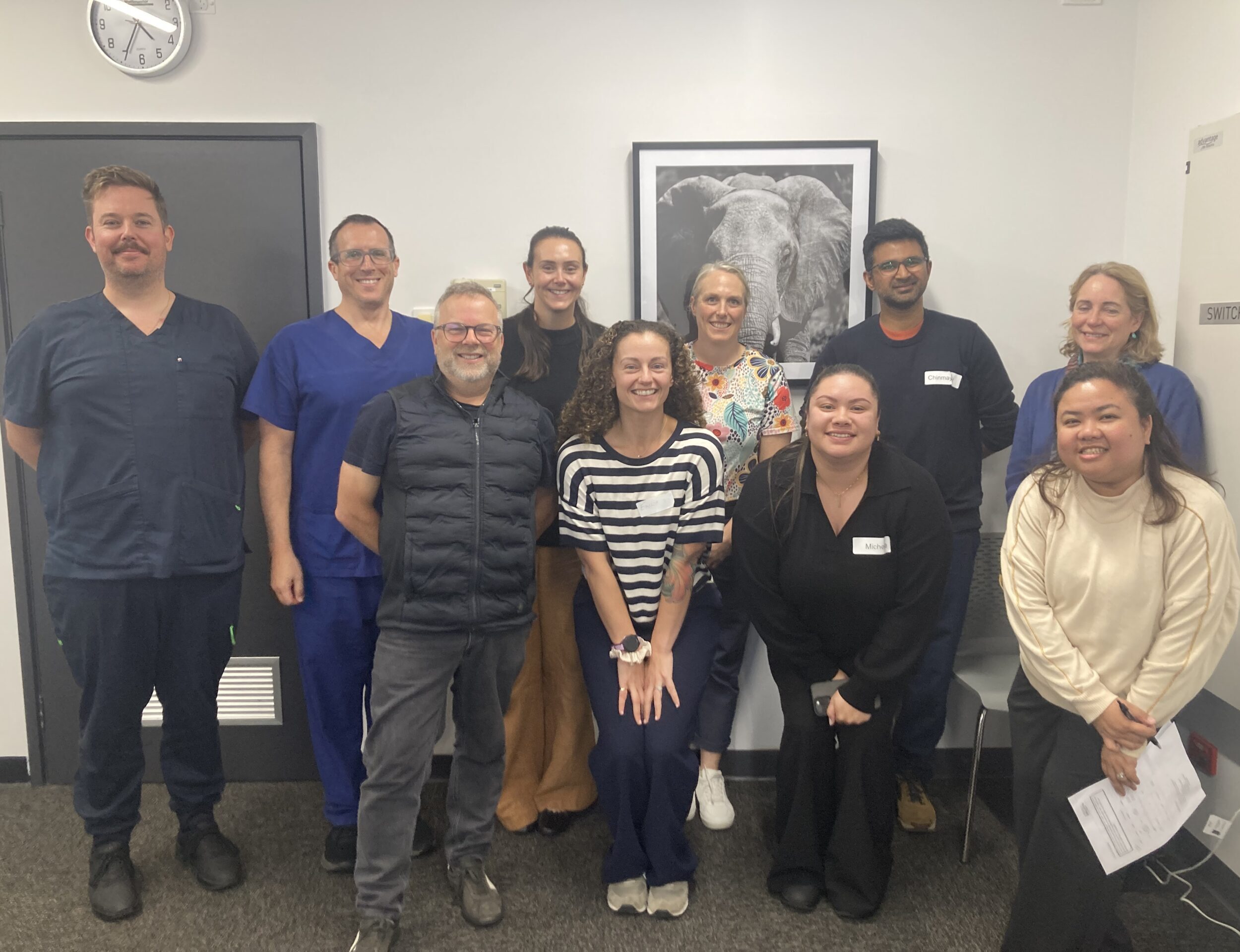
The Monash Simulation team recently welcomed healthcare professionals from a range of disciplines to three days of immersive faculty development, beginning with the Introduction to Scenario Design Course and followed by the Simulation Debriefing Course. Together, these complementary programs equipped participants with practical skills and educational frameworks to design, deliver and debrief high-quality simulation experiences that enhance team performance, communication and patient safety.
The program commenced with the one-day Introduction to Scenario Design Course, where participants explored the foundations of effective simulation-based education. Guided by experienced simulation educators, learners examined principles of scenario design, conducted learning needs analyses and developed strategies for creating meaningful learning outcomes. The workshop combined theory with hands-on application, enabling participants to design and refine their own simulation scenarios within a supportive environment.
A key focus was understanding how thoughtfully constructed scenarios influence learning and performance improvement. Through facilitated discussions and small-group activities, participants explored techniques for learner engagement, psychological safety and balancing educational challenge with support. Real-time coaching helped attendees build confidence in developing simulation experiences relevant to their clinical settings
Participants then progressed to the two-day Simulation Debriefing Course, where attention shifted from scenario creation to guiding reflective learning conversations. Recognising debriefing as one of the most influential components of simulation-based education, the course provided novice and emerging educators with a structured introduction to effective debriefing practice. Interactive workshops and simulated teaching encounters allowed participants to practise pre-briefing techniques, strengthen observation skills and deliver meaningful feedback. Particular emphasis was placed on maintaining psychological safety, managing cognitive load and navigating challenging debriefing situations.
One of the strengths of the combined learning experience was the opportunity to appreciate simulation education as a continuum. Participants gained insight into the complete educational journey, from identifying learner needs and designing purposeful activities through to facilitating reflection and transferring learning into clinical practice.
The inter-professional nature of the courses created a rich learning environment. Clinicians from nursing, medical and allied health backgrounds contributed diverse perspectives, enhancing discussions around teamwork, communication and patient-centred care. This collaborative approach reflects the philosophy of Monash Simulation, where simulation strengthens both individual capability and healthcare systems.
As demand for simulation-based education continues to grow, developing skilled educators remains essential. Participants left with increased confidence, practical tools and a network of like-minded educators committed to advancing simulation practice and supporting safer patient care.
Please find the links below to register for the courses in 2027
Introduction to Scenario Design Course – https://www.trybooking.com/DQFWU
Simulation Debriefing Course – https://www.trybooking.com/DQHTM
Please reach out to the Monash Simulation team at monashsimulation@monashhealth.org to explore partnership opportunities or navigate to our website https://monashhealth.org/services/simulation for more information and opportunities for participation.
Jonathan Devine