
Antibiotic-resistant infections are an increasing challenge worldwide. Many patients with complicated infections can receive intravenous antibiotic treatment at home (through Hospital in the Home).
However, patients with some antibiotic-resistant infections cannot be treated this way, as the antibiotic needs to be kept cool to maintain its optimal effect.
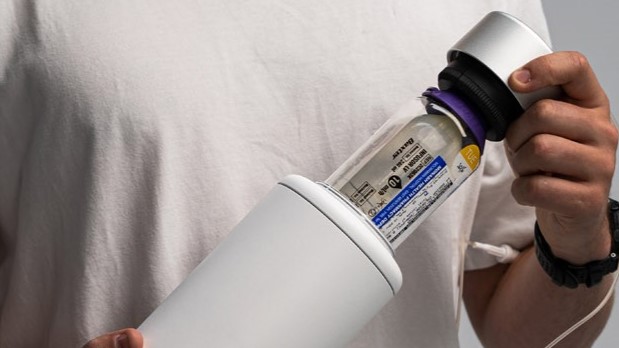
An innovative Monash University and Monash Health research collaboration called ‘CryoCare’ is working to develop a device to allow infusions of cooled medication at home.
CryoCare has developed two prototypes to maintain the antibiotic at a cooled temperature for a 24-hour continuous infusion at home. One is a vacuum-insulated flask with a temperature and infusion status display, while the other is a soft-insulated cooler bag lined with reflective insulation. Hospital in the Home and Infectious Diseases Research Lead Associate Professor Ben Rogers explains that currently, patients with some antibiotic-resistant infections must either stay in hospital or be treated at home with medication that is more difficult and costly to administer and may be less effective.
‘The goal is to be able to treat more patients at home safely and efficiently’ he says.
A/Prof Rogers, who led the clinical side of this multidisciplinary collaboration, explains that whilst this prototype is designed for the last-line antibiotic, Meropenem, there may be other uses.
‘We think it can be used for many other heat-sensitive medications once it’s established, including cancer treatments,’ he says.
The concept was designed by Monash University Design student Geoffrey Thompson, who worked with Dr Rowan Page from the Monash Art Design and Architecture Faculty, A/Prof Rogers and the Hospital in the Home team at Monash Health and industry partners.
The design team said CryoCare demonstrates that by addressing real-world usability and ergonomic challenges, innovations can be achieved that not only fulfil unmet clinical needs but also enhance treatment outcomes and significantly improve the patient’s daily life.
‘This challenges the status quo and demonstrates the benefits of integrating a more empathetic and inclusive design approach within the medical device industry. Working together, we can get patients home and back to familiar surroundings sooner.’
The Victorian Premier’s Design Awards highly commended it in the Student Design category. It also won the Australian Good Design Awards in the Best in Class category and was a Gold Winner overall.
A/Prof Rogers, whose work is supported by an NHMRC investigator grant, says the prototype was developed over three years and will be produced and tested more widely from next year onwards.
It was a research collaboration that was a coming together of minds across industry and medical disciplines. It also includes Monash Institute of Medical Engineering, Monash Architecture and Design Faculty, and Monash Infectious Diseases.
This is one of the many examples of Monash Health supporting our innovators of tomorrow right across industries. Going beyond the conventional avenues to find solutions to better health outcomes.
The team deserves congratulations for cross-industry thinking and cooperation focusing on our patients’ clinical needs, comfort, usability, and dignity!


