
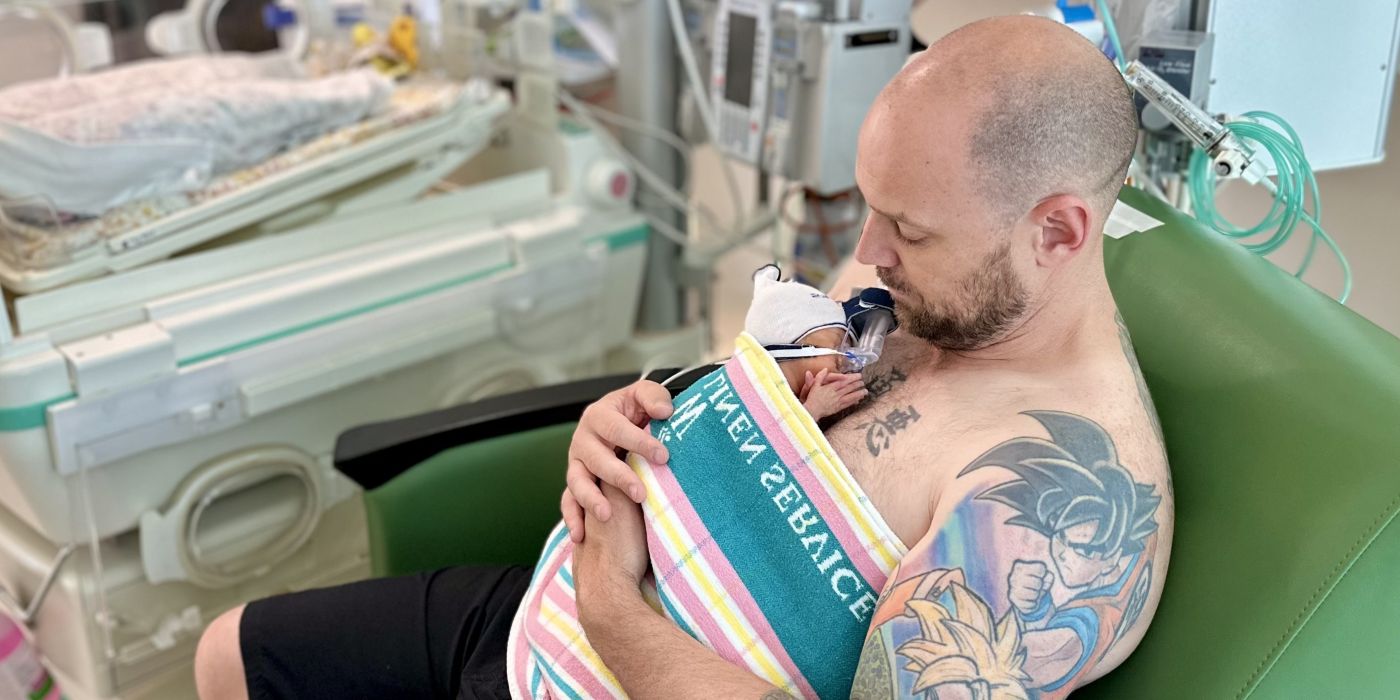
A world-first study has found skin-to-skin contact significantly benefits babies who are deprived of oxygen at birth.
According to the World Health Organisation, birth asphyxia leads to an estimated 900,000 deaths each year.
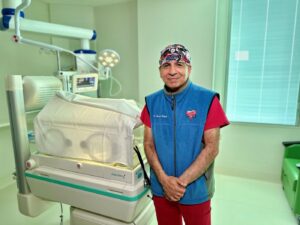
The study by Monash Children’s Hospital’s Head of Neonatal Cardiovascular Research, Professor Arvind Sehgal, and consultant neonatologist Associate Professor Flora Wong, found that following one hour of kangaroo care, the infants had approximately 20% better heart function and brain blood flow, and approximately 8% better brain oxygen delivery.
We were not expecting the findings, but there are scientific explanations behind the results, which include lowering stress levels and changes in the autonomic nervous system of the baby
Professor Arvind Sehgal
The study, published in the Journal of Perinatology, suggests kangaroo care could emerge as a simple, cost-effective, and family-centric treatment for neonatal birth asphyxia.
Birth asphyxia affects one to 2 infants for every 1,000 live births in developed economies. In low-resourced economies, the condition affects 26 infants for every 1,000 live births.
‘It is a strong treatment, that, if performed on a regular basis, has immense potential to improve the outcomes of thousands and thousands of babies worldwide.’
Gigi’s story
The Monash Health Newborn research team set out to explore the impact of 60 minutes of skin-to-skin contact on babies born with severe birth asphyxia. The study examined how this low-cost, family-friendly intervention supported their early recovery.
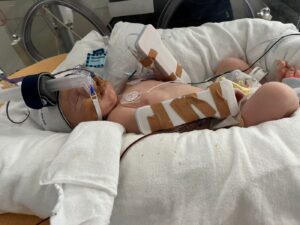
‘We were looking at how skin-to-skin contact between the mother and baby influences three important variables – heart function, blood supply to the brain, and oxygen delivery to the brain – in a population which has not been studied before anywhere around the world: babies born in a setting of severe birth asphyxia,’ said Professor Sehgal.
Baby Gigi was part of the study.
‘Doctor Sehgal caught wind that we had a special case with Gigi’s circumstances,’ said her mum, Rebecca Ellingford.

‘He spoke to us about the benefits [of kangaroo care] and the study he wanted to do, and we were on board to do whatever we could to help Gigi, and being a part of a bigger study, we hoped it would help other babies too.’
Gigi is now 2 years old, and her mum says she’s lively, vivacious, and exceeding her milestones.
‘She was monitored very closely via Monash Health aftercare, but no one had any concerns with her. She never stops talking, which is great, and exhausting sometimes!’
A family-centric therapy
Skin-to-skin contact between a caregiver and a baby is recommended by the World Health Organisation and is common in many neonatal intensive care units.
Since 2020, Monash Health has been conducting studies into the impact of kangaroo care on premature babies.
‘There was the template that premature babies benefit from kangaroo mother care, but premature babies and babies born in a setting of severe birth asphyxia are different — they are like chalk and cheese,’ said Professor Sehgal.
The new study shows infants who suffer from acute deprivation of oxygenated blood to the brain during birth also immensely benefit from kangaroo care.


