
In a high-tech, low-risk environment, clinicians rehearse high-stakes scenarios together, refining teamwork, communication and decision-making so they’re ready when real patients need them most.
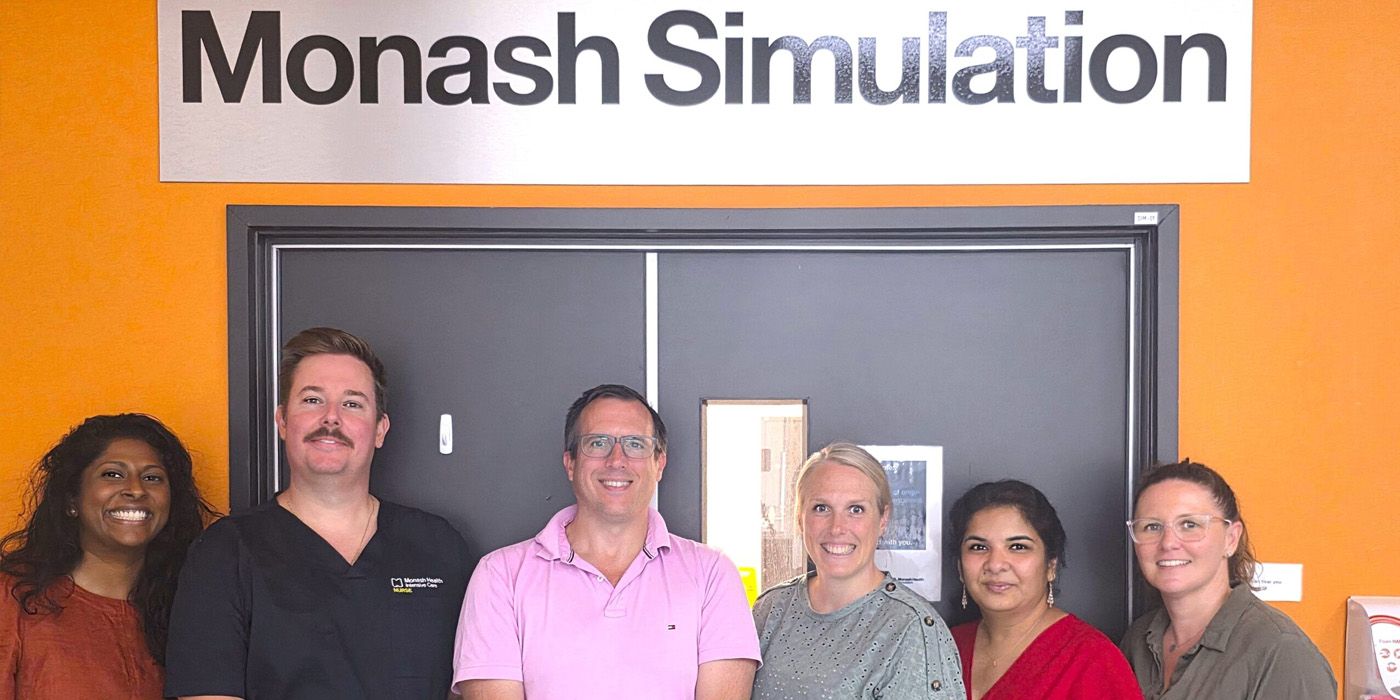
This is Monash Health’s Simulation Centre, a purpose-built training hub where doctors, nurses and allied health staff practise some of the most stressful moments of their careers using life-like manikins, immersive technology and real clinical equipment.
Director of Monash Simulation, Dr Ian Summers, said that the ability to “press pause” for an interdisciplinary team during a crisis is what is drawing a growing stream of visiting medical professionals from other hospitals and countries to its centre.
‘We can pause a crisis, rewind it and try again’
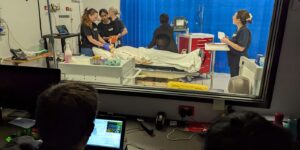
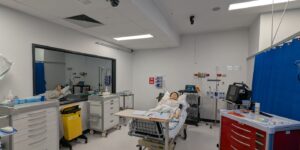
Walking into one of the simulation suites, it looks like any other intensive care unit: ventilators hum, monitors beep and IV lines snake across the bed.
The “patient”, however, is a high-fidelity manikin that can breathe, bleed, blink, speak and respond to medication in real time.
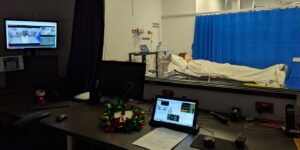
Facilitators in a control room behind one-way glass adjust heart rates, blood pressures and oxygen levels at the touch of a screen, creating realistic scenarios that unfold minute by minute.
The centre runs everything from routine ward scenarios to rare events many clinicians may only see once in their career such as a catastrophic haemorrhage or a major trauma involving multiple casualties.
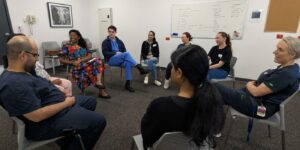
The difference from the real world is what happens afterwards: every scenario is followed by a structured debrief where in some courses, the team would also review multi-angle video and audio recordings.
Staff analyse not just clinical decision-making, but also how people communicate, share information, and work together under pressure.
From operating on life-like manikins to in-situ simulation
The centre uses a mix of technology that would not look out of place in a film studio or gaming lab.
-
High-fidelity manikins that simulate adult patients and capture data on response times and workflow
-
In-situ simulations that move training out of the simulation lab and into real clinical wards, theatres and ICU bedsides
-
Multi-angle audio-visual systems that capture every scenario from several viewpoints for later analysis
Educators said this combination allows them to stress-test not only individuals, but the hospital’s systems, from how quickly equipment arrives on the ward, to whether emergency call processes work as expected.
The centre boasts 2 fully immersive simulation rooms that can be set up for different clinical environments.
On some days, there are fully equipped bays for emergency and intensive care, while on others, the room mirrors operating theatres and general wards.
Each scenario is stocked with the same equipment, documentation and medications used on real shifts.
Simulation Fellow, Dr Jonathan Devine, said during a high-fidelity simulation, the room feels like a real clinical emergency: monitors beep, alarms sound, and a high-fidelity manikin or a ‘real life’ actor responds to every intervention.
Interprofessional teams work under the pressures of the real-world clinical environment, making rapid decisions, communicating clearly, and managing complications as they arise.
‘Every move is captured for a structured debrief, where participants reflect on teamwork and decision-making,’ said Dr Devine.
‘Many describe it as “the closest thing to real life without the risk.” It’s immersive, intense, and invaluable for building confidence and teamwork skills.’
Courses range from single-day masterclasses to 3-day immersive programs focusing on advanced life support, trauma and deteriorating ward patients.
Training as a team, not in silos
One of the centre’s defining features is that almost all courses are interdisciplinary.
Instead of training doctors, nurses, paramedics, and allied health professionals separately, most programmes bring them together as they would work in real life.
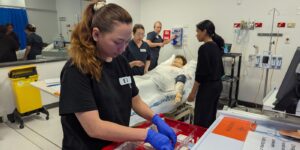
‘In real emergencies, there is no “doctor or nurse-only” resuscitation. We design our programs to mirror that reality. Participants tell us that’s one of the main reasons they come. It’s rare to find a simulation program that brings various disciplines into the same learning space,’ said Dr Devine.
‘We’re also one of the few centres in Australia that offers simulation-based training opportunities for physiotherapists in ICU care for mechanically ventilated patients. They are integral to that care, yet opportunities for them to have immersive training in this situation are rare here.’
Scenarios are written to reflect the reality of large hospitals: complex patients, language barriers, competing priorities and limited resources.
Educators said that, for many participants, the biggest lessons are not about a specific drug dose or protocol, but about speaking up, listening, and making decisions together when time is running out.
Courses span:
-
Emergency and critical care team training
-
Surgical crisis management and anaesthetic emergencies
-
Deteriorating patient recognition on general wards
-
Communication and handover skills for busy clinical environments
-
Human factors, leadership and followership under pressure
An attendee from New Zealand recently participated in a 3-day Advanced Clinical Management in Emergency (ACME) course, which explored the critical role of human factors and team behaviours in emergency care, while honing advanced resuscitation techniques in immersive scenarios.
He praised the hands-on approach, which included airway and vascular access workshops, team-based simulations, and small-group debriefs.
‘The fantastic sim environment was an incredible gift. I appreciated having both positive feedback and constructive. We work “alone” as senior clinicians so much of the time, and it is a rare opportunity to receive meaningful and appropriate feedback,’ he said.
‘The conversational manner to the debriefs and discussions provided a nice opportunity to learn from the experience of others.’
Drawing clinicians from across Australia and overseas
While the Simulation Centre primarily serves Monash Health staff, often at no additional out-of-pocket costs, it is increasingly attracting participants from across Australia and the wider Asia-Pacific region.
Overseas clinicians and educators have travelled to attend tailored programmes on:
-
Building a new simulation service
-
Designing interprofessional simulation curricula
-
Establishing in-situ simulation in resource-limited settings
-
Training faculty in debriefing and human factors
Courses can be customised to align with local guidelines and practice patterns, and visiting teams are encouraged to bring their own case examples to re-create in the lab.
Hospital leaders said this exchange goes both ways: international participants share their own approaches to emergency response, community outreach and health-system challenges, giving local staff fresh perspectives to bring back to their wards.
A gateway into the broader health system
The centre sits within Monash Health, which is the largest and most integrated health service in Victoria, giving participants direct exposure to:
-
High-volume emergency and trauma services
-
Varied specialties and complex surgery
-
Academic departments and research groups
For overseas clinicians, it’s an opportunity not only to train in the Simulation Centre, but also to observe real clinical teams in action, meet potential research collaborators and explore longer-term fellowship or training options.
Building networks, not just skills
The centre’s educators said another drawcard for overseas clinicians is the chance to connect with peers facing similar challenges.
‘Whether you’re from a metropolitan trauma centre or a regional hospital, you’re dealing with the same human factors, fatigue, hierarchy, communication under pressure,’ Dr Devine said.
‘Participants often tell us the most valuable moments are the informal discussions after a debrief, where they compare how their hospitals handle escalation, or how easy it is to challenge a decision.’
Monash Simulation is led by internationally recognised experts and faculty who are clinicians and educators, combining cutting-edge technology, evidence-based education, and global partnerships to shape the future of healthcare training.
‘Monash Health strives to provide world-leading healthcare. We also want to provide world-class education and training to support improved healthcare at a global level,’ said Dr Summers.
For now, in a set of rooms tucked away behind the busy wards, future emergencies are quietly being rehearsed, so that when the real ones come, teams are as prepared as possible.
Book your next immersive simulation course here.


