

Did you know that between 30–50% of patients aged over 65 are affected by delirium during their hospital stay? This Delirium Awareness Day, we are excited to launch two initiatives to help us tackle this serious but often misunderstood condition. Learn about the delirium toolkit boxes making their way to our wards and how families and staff can tell us about their experiences in helping to manage this condition.
What is delirium and why does it matter?
Delirium is a sudden change in a person’s mental state that causes confusion, difficulty concentrating, and changes in perception. While anyone can experience delirium, older people, those with underlying health conditions, and people in hospital are at greatest risk.
‘Some patients become very withdrawn and quiet, while others become agitated and anxious,’ said Dr Amelia Crabtree, Program Medical Director, Aged Care and Rehabilitation Services at Monash Health.
‘They can have hallucinations and become very distressed and it can be extremely difficult for them and for their families.’
While the psychological and emotional impacts of delirium are substantial, the health impacts are not as widely known in our community.
‘Delirium can result in prolonged hospital stays, increased risk of falls and infections, and worsening existing health conditions,’ explains Dr Crabtree. ‘In some cases, it can cause dementia and reduce independence by impacting the patient’s ability to do day-to-day tasks.’
Unfortunately, delirium is extremely common, with a 30% prevalence following procedures like hip surgery, and more than 50% prevalence for those in ICU.
Change begins with awareness
Early detection and management are among the best ways to support our patients, and Taree Gibson, Cognitive Clinical Lead at Monash Health, encourages everyone working in the hospital environment to be ‘delirium aware’.
‘Being aware of delirium as a common complication – especially in older adult patients – allows changes in thinking, behaviour and function to be picked up earlier,’ Ms Gibson said. ‘This means that the issues can be escalated quicker and managed appropriately.’
For patient families the message is similar.
‘You are the ones who often know the patient best – if you notice that they are behaving differently, say something and let us know straight away.’
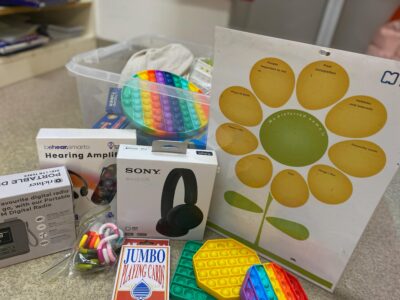
New toolkits to improve patient comfort and wellbeing
This month, we are excited to roll out new Delirium Toolkits across Monash Health. The boxes contain a range of items designed to support patients experiencing delirium, helping them feel more comfortable and calm, and providing teams with a range of ways to support them.
The toolkits include items such as fidget toys, Sudoku puzzles, music players, headphones and hearing amplifiers. These simple but effective tools can help keep patients occupied, reduce agitation, and support their recovery.
By making these items readily available within our wards, we are equipping our teams to offer practical support that can make a big difference to a patient’s overall sense of wellbeing.
‘Providing meaningful activities that a person can engage in while they are staying in hospital, such as a word puzzle or crossword, can help prevent boredom and provide a diversion,’ Danielle Byrne, Cognition Clinical Lead at Monash Health, shared. ‘Something relatively simple, like a hearing-enhancement device, can make a big difference—the hospital environment can be very confusing and being able to hear those around you can provide a sense of reassurance.’
Exploring perceptions of the inclusion of families and carers in delirium management
Families and carers play a crucial role in the management of delirium, and as an organisation, we want to better understand the barriers and enablers to their inclusion in the delivery of care.
To this end, we are conducting important research into this topic and inviting insights from both staff and families that have provided delirium care as part of a recent hospitalisation.
Families wishing to provide their insights and experiences in the management of delirium as part of a current or recent hospitalisation at Monash Health, can do so by emailing our research team at CognitionClinicalLead@monashhealth.org.
Insights from our teams and families will help us better understand the challenges and opportunities to improve delirium care and strengthen the partnership between families, carers, and healthcare staff.
Together, we can continue to improve the experience of people experiencing delirium – helping them feel more comfortable, connected and cared for so that we can achieve better health outcomes.


